Independent Authors
copyediting, line editing
You have a story to tell, expertise to share, wisdom to impart. Make sure you also have the help you need to refine, enhance, and polish your writing.
Before you work with a copyeditor or line editor, you need to be sure you have the final version of your manuscript. Ask yourself this essential question: Does this piece work from beginning to end?
After your first draft, second draft, nth draft, if you’re uncertain about big-picture aspects—like focus, content, structure, framing, tone—you’ll want to collaborate with a developmental editor for feedback and guidance on revising your manuscript to arrive at your final draft.
Then we can talk. Depending on the purpose of your manuscript and the concerns you have for it, you might request a line edit, copyedit, or both.
A copyedit—the polish—is a must for professional publishing. At the very least, copyediting catches the mechanical errors of grammar, spelling, punctuation, and the like. It also addresses clarity and flow.
A line edit is optional, however. It happens before or along with copyediting and addresses aspects like pacing and mood. By crafting your writing to be more nuanced and compelling, line editing elevates the reader experience.
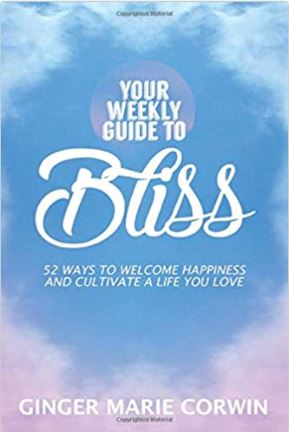
“Dana is absolutely gifted at what she does. After speaking with several other highly recommended editors, I knew she was the perfect person to edit my book within seconds of connecting with her. She is professional, knowledgeable, positive, and truly a pleasure to work with. It was apparent in every interaction I had with her that she loves what she does, and it shows in her work product. Dana had a way of knowing and understanding my voice, and I used almost every single edit and revision she suggested for my book. She understood my vision beautifully.“
GINGER CORWIN, AUTHOR, SPEAKER, AND LIFE COACH
Other testimonials
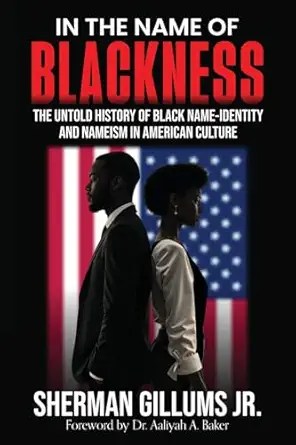
I sought Ms. Johnson’s editing services while working on my very first book. I knew I had made the right decision during our initial consultation, when she helped me understand the nuances of editing as they pertained to my manuscript. Once I had decided to retain her copyediting services, the contract process was seamless, and the timeline aligned with my expectations. The finished product was far more thorough than I expected as a first-time author. Her attention to detail and knowledge of the publishing process helped improve my manuscript and better anticipate what to expect. I would recommend Ms. Johnson to anyone looking for a first-class copyeditor whose value far exceeds the cost of retaining her for services. — Sherman Gillums Jr., Adjunct Professor at University Maryland Global Campus
Dana is an excellent editor and thought partner. I have had the pleasure of working with her on two major projects: a dissertation and a book. Through both processes, Dana exemplified professionalism, patience, and expert knowledge on what was necessary to create an exemplary written product. Dana was timely in her responses and worked diligently with me as ideas were exchanged and continuous edits occurred. She worked to promote my unique voice and message, never once dismantling my original meaning. She has a laser-like focus on refining writing skills and techniques. Dana worked to ensure that I was valued as a writer and never minimized work submitted or thoughts shared. Dana never disappointed with her delivery of materials to me, and I definitely considered her a valuable resource. — Antoinette Pearson, EdD, CEO and Lead Consultant of Common Sense Learning
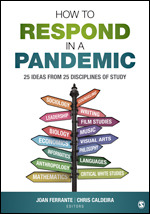
Most recently, Dana worked on an edited volume of essays involving 25 authors, How to Respond in a Pandemic: 25 Ideas from 25 Disciplines of Study (SAGE). Dana’s copyediting established a coherence to the many voices, and her attention to detail was essential for ensuring that footnotes and references met professional standards. Writing is difficult, and readers are impatient when things are not clear. Everyone needs careful eyes as keen as Dana’s to assess their writing and make it better. — Joan Ferrante, PhD, Professor of Sociology, Northern Kentucky University; Founder and Director of the Mourning the Creation of Racial Categories Project
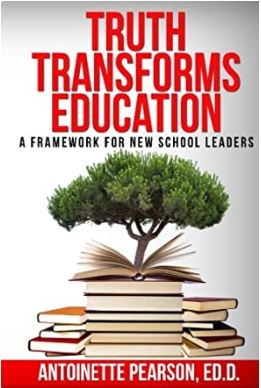
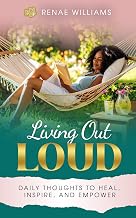
Select titles
What does a copyedit or line edit with me look like?
- You contact me with some basic information about your project.
- If your project is a potential fit for me, we meet to introduce ourselves, discuss your project, and see if we vibe.
- If we agree to move forward, you send your manuscript—held in confidence, of course—so I can assess the scope of the project, estimate the hours needed to complete the project, and determine a project rate. During this assessment, I do a sample edit to time myself. I then share the edited sample with you so that you can see how I work.
- If you are still interested in working with me, I write up an agreement outlining my services and your specifications, handoff and due dates, project rate and deposit amount, payment information, and contingencies.
- You sign and return the agreement and pay the deposit.
- You send your final manuscript by the handoff date, and I complete the edit by the due date.
- You pay the balance of the project rate, and I send you your edited manuscript.
- If you opt for a follow-up, we meet to discuss any questions you have about specific edits or the revision process so that you feel confident about reviewing and revising your edited manuscript.